2026-09-10
Why Central Subnasal Philtral Reduction Is Not Performed on Everyone
Central Philtral Reduction is not universally applied because it pulls the columella downward; it is selectively indicated for patients with a short columella and long central philtrum.
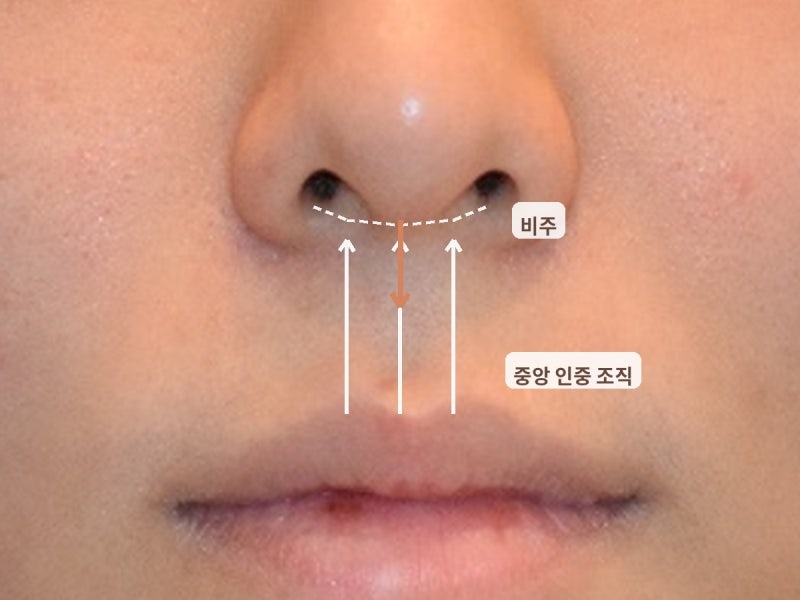
While it can be corrective for individuals with a short columella, the exact same surgery cannot be universally applied to all facial structures.
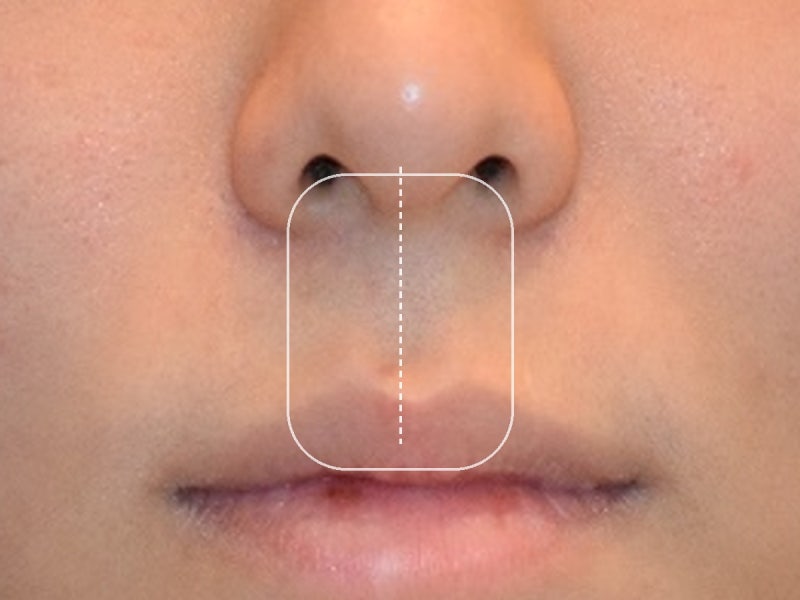
Hello, I am Dr. Sang-hoon Song, Chief Director of Golden Diamant Plastic Surgery.
Recently, when looking into philtrum reduction, you may come across various terms such as "3D Scarless Philtral Reduction" or "Columellar Philtral Reduction." While incision locations and fixation methods may differ between clinics, these procedures are generally understood similarly in that they shorten the central philtrum using the central subnasal area.
At Golden Diamant, we have long classified the method of shortening the philtrum centered on the subnasal midline as a distinct procedure termed "Central Philtral Reduction (CPR)." However, simply because it can be performed does not mean it should be recommended to every patient seeking philtrum reduction.
01 Shortening the central philtrum while simultaneously evaluating the columella
The key to Central Philtral Reduction is not merely "shortening the center."
In the process of elevating the central portion, the columella can appear shifted downward; therefore, the pre-operative columella position must be assessed in advance.
Central Philtral Reduction involves making an incision focused beneath the central columellar base, shifting the central philtral tissue upward, and securing it in place.
During this process, although the philtrum is shortened, the anchoring tension is also transmitted to the lower columella, which can cause the columella to appear pulled downward.
Consequently, this surgery is not just about reducing the length of the central philtrum—it is a procedure that requires planning with a comprehensive evaluation of the pre-operative columella position and the central subnasal contour.
In Central Philtral Reduction, rather than asking "How much should we shorten?", one must first ask: "How far down can the columella descend while remaining natural?"
02 Cases where this procedure becomes an advantage
When the columella is short or retracted inward
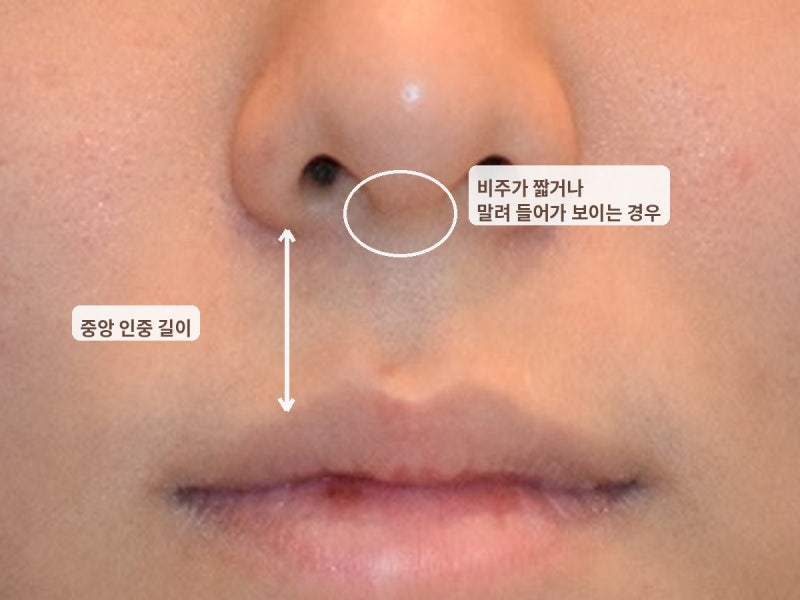
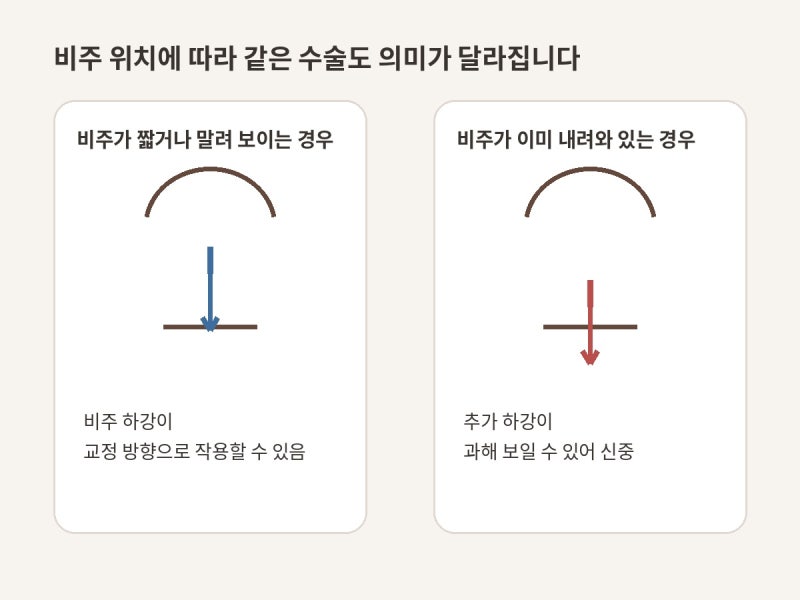
When the columella appears short or retracted while the central philtrum is long, the downward shift of the columella can be utilized as a corrective benefit.
Some individuals have a columella that looks short or curled inward, giving the subnasal midline a sunken appearance.
In such cases, an appropriate downward repositioning of the columella after central philtral reduction acts not as a drawback, but rather as an effective aesthetic correction.
In particular, if the central philtrum is elongated, the central upper lip rolls inward, and the positions of the lateral philtrum and lip corners are relatively stable, it is ideal to take advantage of central changes.
Even when upper incisor show is minimal, a moderate elevation of the central upper lip can be beneficial.
03 Changes that must be observed in practice
When the columella descends, the impression of the central subnasal area changes
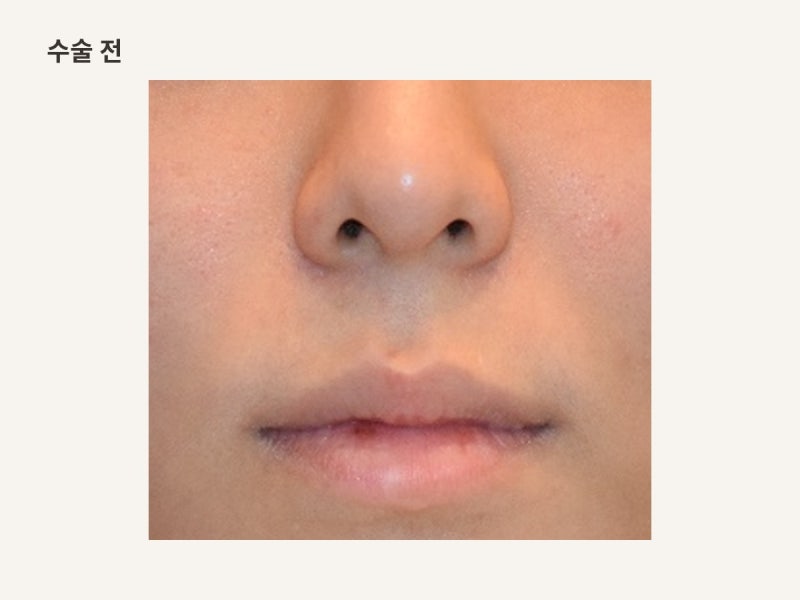
In clinical case images, one can clearly observe how the relationship between the central philtrum and the columellar perimeter changes.
Before surgery, a short columella may make the central subnasal area less defined. Post-operatively, as the central philtrum shortens and the columella is slightly more revealed downward, the contours of the subnasal midline become sharply defined.
What matters here is not lowering the columella indiscriminately. The excision volume and vector of fixation must be calibrated so that the modification remains completely harmonious with the facial structure.
Even within the same central subnasal philtral reduction, the degree of columellar descent varies based on how far the surgeon excises, which anatomical layer is dissected, and where and in which direction tissues are anchored.
04 Conversely, cases requiring caution
When the columella is already adequately descended
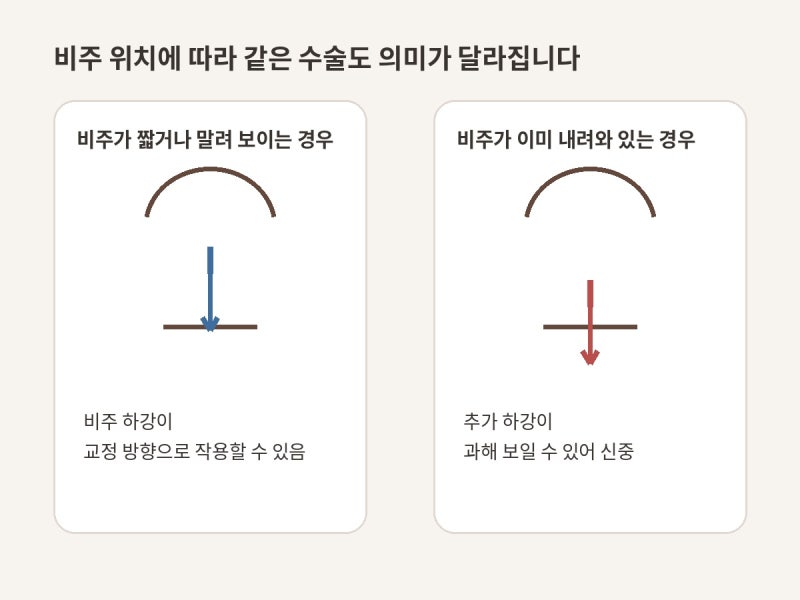
The exact same columellar descent can serve as a correction for one individual, yet result in an exaggerated change for another.
What happens if a downward shift is introduced in someone whose columella is already long or prominent?
The columella can appear excessively lowered, making the subnasal area look heavy or overemphasizing the medial nostril base.
Therefore, if the columella is already positioned sufficiently low, if there is substantial upper tooth exposure, or if the upper lip is already noticeably lifted, Central Philtral Reduction is not recommended as a default choice.
For patients with a long lateral philtrum accompanied by drooping mouth corners, elevating solely the center can steepen the slope of the lateral lip, making the corners look comparatively more turned down; in such cases, alternative methods should be evaluated.
05 More important than procedure names
Excision boundaries and fixation vectors dictate the outcome

Even with the same excision amount, variations in the anchor site and vector of tension alter the ultimate outcome of the columella and lips.
Surgical names introduced nowadays—such as "3D", "Scarless", or "Columellar Philtral"—have the advantage of being easy for patients to understand. In particular, approaches aimed at mitigating external visible scarring are undeniably meaningful.
However, Central Philtral Reduction is not a simple surgery merely because the incision is compact. It requires simultaneously regulating the positions of the columella and the lips while reducing the philtrum within a confined central perimeter.
At Golden Diamant, we establish the resection design and fixation vectors by holistically evaluating the ratio between the central and lateral philtrum, the contours of the columella and nasal sill, tooth show, upper lip slope, and mouth corner positions.
06 It is not that we "rarely perform it"—
We perform it selectively on candidates with the appropriate indications
At Golden Diamant, surgical techniques are chosen by assessing not only philtral length, but also the columella, subnasal sill, lips, and oral commissures collectively.
Central Philtral Reduction is not infrequently performed because it is an inherently unfavorable surgery.
For patients who present with a short or retracted columella, a long central philtrum, and compatible lateral philtrum and dental exposure characteristics, it can actually be a remarkably reasonable and optimal choice.
Conversely, if the columella is already lowered, or if lifting only the center risks breaking the harmony of the lip shape and corners, alternative philtral reduction methods will yield a far more natural aesthetic.
Ultimately, what matters is not following a trending procedure name, but accurately determining which structures in your specific facial anatomy need to be shifted and which must remain untouched.
#GoldenDiamantPlasticSurgery #DrSanghoonSong #CentralPhiltralReduction #ColumellarPhiltralReduction #3DScarlessPhiltralReduction #PhiltralReduction #Columella #SubnasalSill #PerioralAesthetics
Frequently Asked Questions
Does the shape of the columella change during Central Subnasal Philtral Reduction?
Yes, the columella may appear shifted downward during the procedure. This occurs because the tension used to pull and secure the central philtral tissue upward is partially transmitted to the inferior columella. Therefore, the original position and anatomy of the columella must be evaluated and accounted for when planning surgery.
Who is an ideal candidate for Central Subnasal Philtral Reduction?
It is suitable for individuals with a short or retracted columella paired with an elongated central philtrum. It is especially effective when the central upper lip is rolled inward, resting upper incisor exposure is minimal, and the lateral philtrum and mouth corner positions are relatively stable.
Can someone whose columella is already elongated undergo this surgery?
It is generally not recommended and requires great caution. Performing central subnasal philtral reduction when the columella is already long or descended can cause the columella to droop excessively, making the subnasal area look heavy or drawing unnatural attention to the medial nostrils.
Can I shorten only the central area if my lateral philtrum is also long?
This is typically discouraged, and alternative surgical techniques should be considered. Elevating only the center when the lateral philtrum is long and the mouth corners droop can exaggerate the downward slope of the outer lip, making the corners appear even more turned down.
Is Central Subnasal Philtral Reduction a procedure that should be avoided?
No. It is a selective procedure executed when a patient’s anatomical features meet the proper indications. For candidates whose columella, subnasal base, lips, and oral commissure balance are deemed suitable, it is an exceptionally reasonable and effective corrective solution.