2026-10-03
Why Philtrum Reduction Consultations Include Checking Your Smile
Explains why philtrum reduction consultations assess smiling, lip movement, tooth exposure, and left-right balance, not just a front-facing photo at rest.
Hello.
Golden Diamant Plastic Surgery Clinic, Cheongdam-dong
I am Dr. Song Sang-hoon, the director of the clinic.
When considering philtrum reduction, most people first look at a front-facing photo with the mouth closed.
This is because it is easy to compare how long the space is from under the nose to the upper lip.
However, some people's philtrum may look long at rest, yet when they smile, their upper lip rises considerably, revealing plenty of teeth and gums.
In cases like this, it is difficult to determine the scope of surgery based on length in a front-facing photo alone.
This is because both your at-rest appearance and your smile can change after philtrum reduction.
Today, I would like to explain why we check not only your smile but also the shape of your mouth when you speak during consultations.
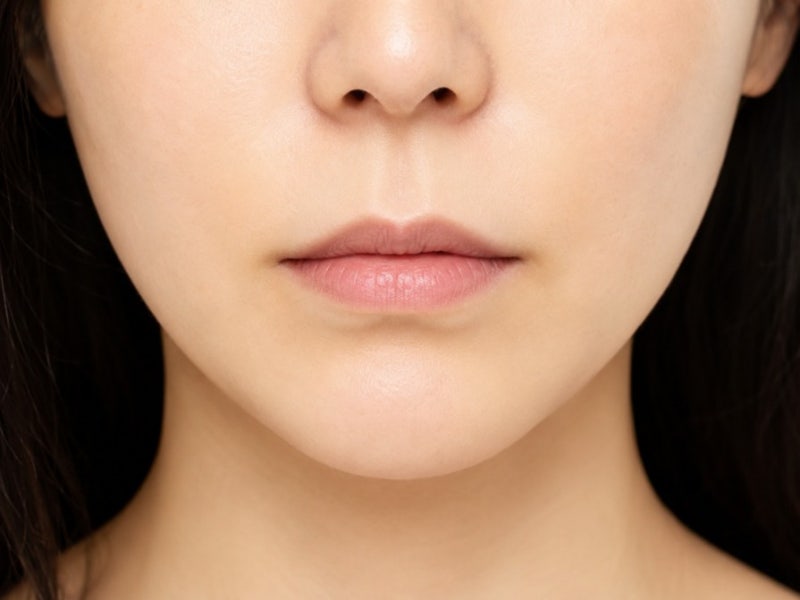
Close-up of a woman's relaxed lower face, showing the nose, philtrum and closed lips.
The upper lip looks different at rest and when smiling.
Lips are not fixed lines in a photo.
When you smile, the upper lip rises and the corners of the mouth move outward, and the extent of this movement varies from person to person.
Some people show little vermilion at rest but reveal plenty when they smile, while others have an upper lip that curls inward even when they make an expression.

Therefore, we do not plan a large philtrum reduction simply because the lips look thin at rest.
By separately evaluating the thickness of the lips, the visible area, and how they move with expression, we can explain what changes are needed.
How much of the teeth shows is also an important criterion.
Philtrum reduction changes the position of the upper lip, which may make the upper front teeth more visible.
This can help people whose front teeth were hard to see and whose mouth felt cramped. However, the same change may not feel comfortable for those who already show a lot of teeth.
That is why we look at three states: lips relaxed, a slight smile, and a full smile.
The amount of teeth and gums visible is influenced not only by lip movement but also by the teeth, gums, and jaw structure.
Even if a lot of gum shows, the cause cannot be fully explained by philtrum length alone.
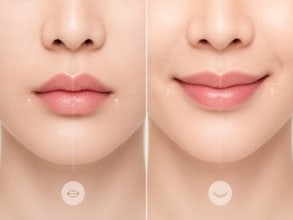
Side-by-side comparison of the lips at rest and while smiling, with arrows at the mouth corners and a center guide line.
We first check whether your mouth closes comfortably.
When taking photos, if you deliberately press your lips together or tense your chin, your mouth may look different from its usual shape.
During consultations, I also check how your mouth looks when it is comfortably closed.
This is to see whether your lips part when you relax and whether your chin moves excessively when you close your mouth.
If you already have difficulty closing your mouth, we must carefully consider whether reducing the philtrum would add to that burden.
In such cases, we check other causes such as tooth alignment and jaw relationship, and if necessary, may first recommend the appropriate treatment.
Philtrum reduction is not a surgery that resolves all problems with closing the mouth.
We also pay close attention to left-right differences that appear when smiling.
At rest, the height of both mouth corners may look similar, but when smiling, one side may rise more than the other.
If the upper lip's central elevation differs from the movement of the outer lip, the two sides may not look equal even when the same amount is reduced.
For this reason, we do not judge symmetry from a single front-facing photo during consultation.
We need to check whether the difference was present from the start or is a change that occurred after a previous procedure or surgery. Then we explain which parts can be adjusted with surgery and which may remain.
Photos showing your everyday expressions are also helpful.

If you are preparing for a consultation, you are welcome to bring an unedited front-facing photo and a photo of you smiling naturally.
Photos that show your appearance during everyday conversation are more helpful than photos with pressed lips or an exaggerated smile.
That said, photos are only supplementary to an in-person examination.
At Golden Diamant, while measuring the length of the philtrum, we also examine the movement of the upper lip, the amount of teeth showing, and changes in the mouth corners and chin.
When deciding on surgery, I hope you will consider not only “how short it will look at rest” but also “whether it will feel comfortable when you smile and speak.”
Aim for a mouth shape that looks both natural and beautiful.
If you have any further questions, please call our clinic.
We will be happy to guide you through your consultation.
Thank you.
#GoldenDiamantPlasticSurgery #DrSongSanghoon #PhiltrumReduction #PhiltrumReductionConsultation #UnderNosePhiltrumReduction #ToothExposure #SmilingMouthShape #LipAsymmetry #MouthShapeSurgery #CheongdamPlasticSurgery
Frequently Asked Questions
Why do you check your smile during philtrum reduction consultations?
This is because the movement of the upper lip and the amount of teeth showing when smiling differ from those at rest. Even if the philtrum looks long at rest, the upper lip may lift considerably when smiling, causing excessive exposure of teeth or gums. For this reason, we do not determine the scope of surgery based solely on the length in a front-facing view, and instead review how the appearance changes with expression.
If my lips look thin at rest, do I need a large philtrum reduction?
No. We do not recommend a large philtrum reduction simply because the lips look thin. Some people show little of their lips at rest but reveal plenty when smiling, while others' upper lips curl inward even when making an expression. Therefore, the plan should be based on a comprehensive assessment of lip thickness and movement with expression.
Can more teeth or gums show after philtrum reduction?
Yes. As the position of the upper lip changes after surgery, more of the upper front teeth may be exposed. This can be a positive change for those who previously showed few front teeth, but if teeth or gums are already overexposed, it may cause discomfort. That is why we check the amount of tooth exposure in a smiling state in advance during consultation.
I have trouble closing my mouth naturally. Is philtrum reduction still possible?
This requires careful evaluation, and we may not recommend surgery right away. Reducing the philtrum when closing the mouth is already difficult may add to that burden. We first need to identify other causes, such as chin movement, tooth alignment, or jaw structure, and if necessary, appropriate treatment should be completed first.
Is it helpful to bring photos to a philtrum reduction consultation?
Yes. Photos showing your natural expressions during everyday conversation are helpful for consultations. Unedited front-facing photos and natural smiling photos serve as useful references for surgical planning, and they supplement the in-person examination when analyzing upper lip movement and left-right asymmetry.