2026-08-01
Reasons Why Lips, Philtrum, and Lip Corners May Look Awkward After Surgery: Is it Only a Matter of Length and Height?
After lip corner or philtrum reduction surgery, some people find their overall mouth shape looks unnatural, even with altered lengths and positions. This isn't just about millimeters; factors like lip width, upper lip contour, outer lip curling, and scarring all play a role.

Hello.
I am Song Sang-hoon,
Chief Director of Goldendiamant Plastic Surgery in Cheongdam-dong.
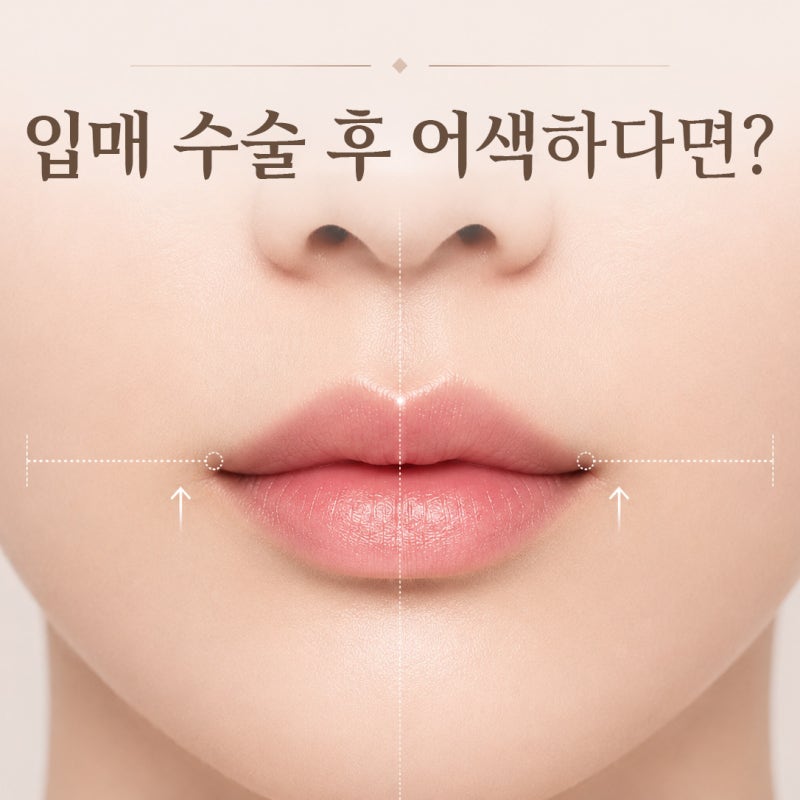
After undergoing lip corner surgery or philtrum reduction, even though the length has clearly changed and the position of the lip corners has shifted,
there are cases where the entire mouth shape feels awkward.
This feeling cannot be explained simply by how many millimeters the philtrum was reduced or how much the lip corners were lifted. This is because the horizontal length of the lips, the slope of the upper lip ridge, the curling of the outer lips, the position of the left and right lip corners, and the scarring and tissue contracture can all have an impact.
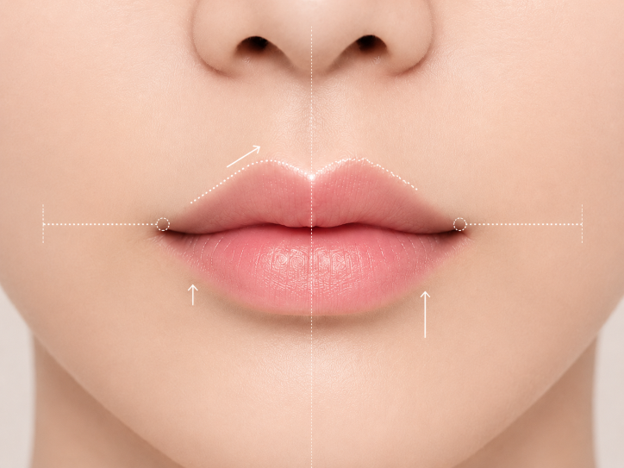
Therefore, if you are considering revision surgery, rather than thinking ‘how many more millimeters should I reduce?’ or ‘how much more should I lift the lip corners?’,
you should first analyze the cause of the current awkwardness in your mouth shape.
In this Part 1, I will explain why the mouth may look short and constricted after surgery,
and why simply adjusting the height of the lip corners does not resolve asymmetry.
Reasons why the mouth may look short and constricted
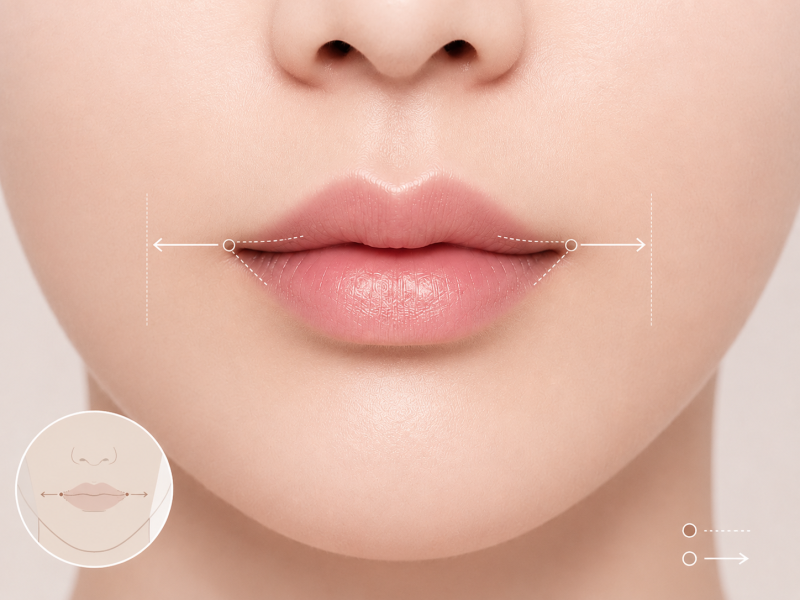
The horizontal length of the lips is one of the factors that determine how open and balanced the mouth appears on the entire face.
However, it should not be judged solely by the actual lip length.
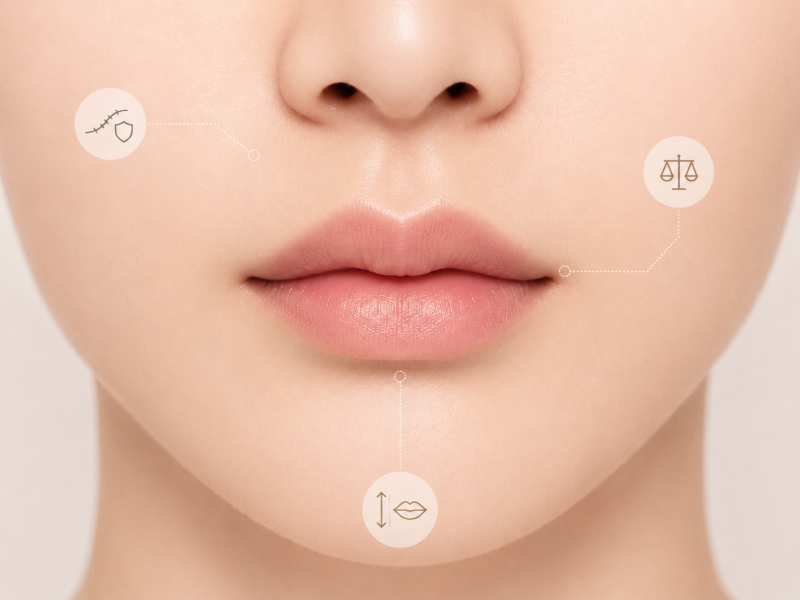
Even if the left and right widths of the lips are similar, if the outer part of the upper lip is curled inward,
or if the lip ridge descends steeply, the mouth may appear shorter than it actually is.
In particular, in the case of a ‘triangular lip’ shape where the upper lip appears like a ‘ㅅ’ (Korean letter ‘s’), the central part may look prominent,
but the outer lips may appear short and curled, making the mouth feel constricted.
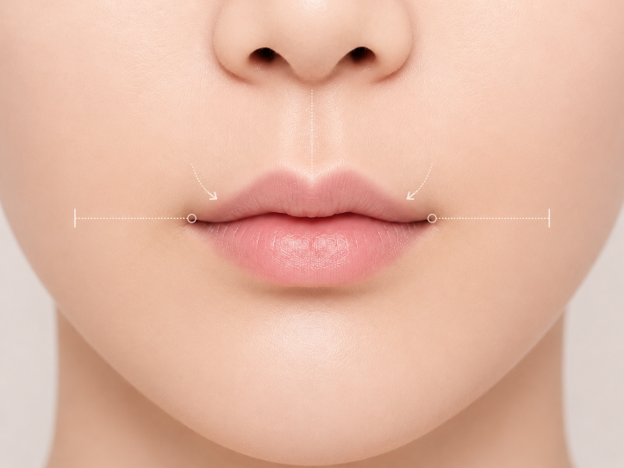
If one lip corner is lower or the left and right lip lengths are different,
the entire lip may appear tilted to one side.
For men, rather than creating a smiling impression by lifting the lip corners significantly,
some consider lip corner surgery with the aim of naturally extending the seemingly short horizontal width
and correcting left-right asymmetry.
Common reasons for considering revision surgery after the first operation
There are broadly three main reasons for considering revision mouth surgery.
The first is when the desired change is not sufficient.
Even after philtrum reduction, the philtrum may still appear long, or after lip corner surgery, the change in the horizontal length of the mouth or the position of the lip corners may not feel sufficient.
The second is when the left-right balance or lip shape is unnatural.
Even if the lip corner heights have become similar, one side of the upper lip may appear thicker, or the slopes of the lip ridges may differ, making asymmetry more noticeable.
The third is when scars or tissue deformation have occurred.
Clear scars may remain at the surgical site, or tissue may become firmly contracted, leading to indentations, pulling, wrinkles, or asymmetry when making facial expressions.

As the reasons for needing revision surgery vary from person to person,
it should not be approached by simply re-incising the results of the previous surgery.
Will adjusting only the lip corner height resolve asymmetry?
When lip corner asymmetry is visible, it is easy to want to make the heights of both lip corners exactly the same.
However, if the existing lip structures are different, simply making the lip corner heights identical
does not mean the entire mouth will appear symmetrical.
For example, if the outer part of one upper lip is thinner and curled inward, and only the lip corner is lifted more, the lip thickness in that area may appear relatively thicker.
If the height of the upper lip peak or the slope of the ridge differs between the left and right sides, it may be necessary to plan different excision amounts and designs for both sides to naturally connect with the new lip corner position.
In other words, surgery to correct asymmetry is not about operating on both sides identically, but rather a process of analyzing different conditions and then designing them differently so that the results appear balanced.
Concluding Part 1
The causes of an awkward mouth shape are difficult to summarize as just one factor of length and height.
Especially in revision surgery, it is crucial to first identify which elements are causing the awkwardness based on the already altered lips and scar tissue, rather than the structure before the first surgery.
In the upcoming Part 2,
I will explain how to plan for horizontal lip length extension,
why both a neutral expression and a smile must be considered, the direction of pulling from scars and contracture, and the limitations of number-centric design and overcorrection.
I will continue with these explanations.
Thank you.
#GoldendiamantPlasticSurgery #DirectorSongSangHoon #MouthRevisionSurgery #PhiltrumReductionRevision #LipCornerRevision
#LipAsymmetry #TriangularLips #OuterLipCurling #LipCornerSurgery #CheongdamPlasticSurgery