2026-09-15
Will a Philtrum Reduction Flare the Nose? Does It Make the Alar Base Wider? | Golden Diamant
Subnasal philtrum reduction changes tension around the nose and lip. Learn how alar base width, nasolabial angle, and surgical design prevent unnatural flaring.
Why We Must Evaluate the "Nose" Together in Subnasal Philtrum Reduction

Hello.
I am Dr. Sang-hoon Song, Chief Director of Golden Diamant Plastic Surgery in Cheongdam-dong.
During philtrum reduction consultations, one question arises far more frequently than you might expect:
"If I shorten my philtrum, will my nostrils flare or will the shape of my nasal tip change?"
Subnasal philtrum reduction is not a surgery that directly alters the nasal bones or cartilage.
However, because the incision and fixation occur right at the subnasal border and the soft tissue of the upper lip is elevated,
the tension and proportions where the nose meets the lip shift, which can indeed alter the appearance of the lower nose.
A philtrum reduction is neither "completely unrelated to the nose" nor "a procedure that unconditionally alters the nose."
01 The Base of the Nose and the Upper Lip Share a Single Boundary
Why do we examine the nose together when the goal is simply shortening the philtrum?
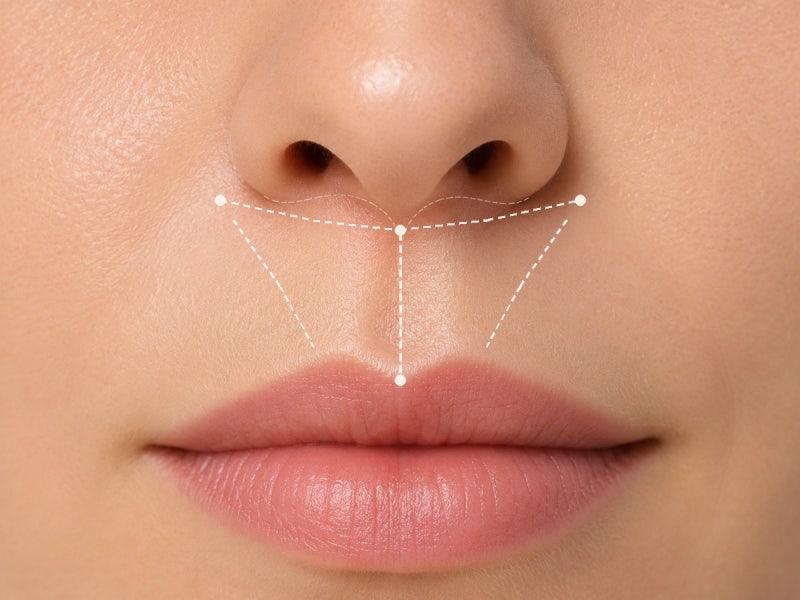
Subnasal philtrum reduction typically involves excising a planned amount of skin and soft tissue along the lower border of the nose,
followed by elevating and anchoring the tissues on both sides superiorly.
Consequently, the surgery does more than merely shorten the vertical length of the philtrum;
the upper lip is lifted, revealing more vermilion (the pink portion of the lip),
and upper incisor show increases.
At the same time, the angle and tension at the junction between the subnasal border and the upper lip change.
For this reason, surgical design must go beyond deciding how many millimeters to excise—
it must also account for the contour of the subnasal sill, the alar base width, and the relationship between the columella and upper lip.
02 Concerns About the Nose Looking "Flared" or "Wider"
The first elements to evaluate: the alar base and the nasal sill
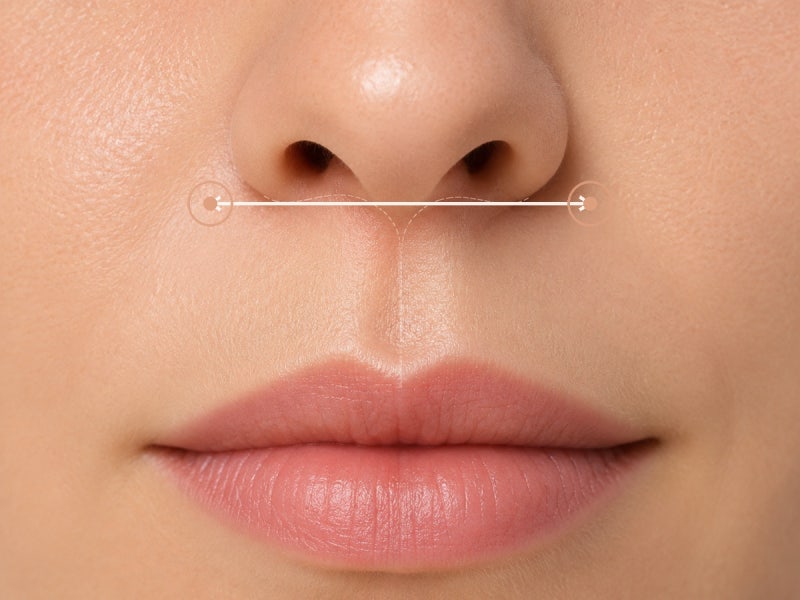
Alar base width is a vital reference point that must be thoroughly assessed prior to surgery.
Because a philtrum reduction shifts tissue upward and anchors it beneath the nose,
it is possible for the appearance of the nasal sill or alar contours to change postoperatively.
However, undergoing a philtrum reduction does not mean everyone's nostrils will widen.
The outcome depends significantly on the patient's baseline alar and nasal sill anatomy,
how far laterally the excision extends,
the vector along which tissue is lifted,
where deep fixation is placed, and how tension is dispersed—
all of which depend on the surgeon's refined technique.
Even when reducing the exact same philtral length, variations in these technical steps apply entirely different forces to the subnasal area.
Therefore, pre-operative planning cannot rely solely on measuring philtral length; it requires evaluating alar base width, nostril floor anatomy,
and baseline asymmetries to design a procedure that accounts for how tension forces will act postoperatively.
03 Why the Nasal Tip May Appear More Projected
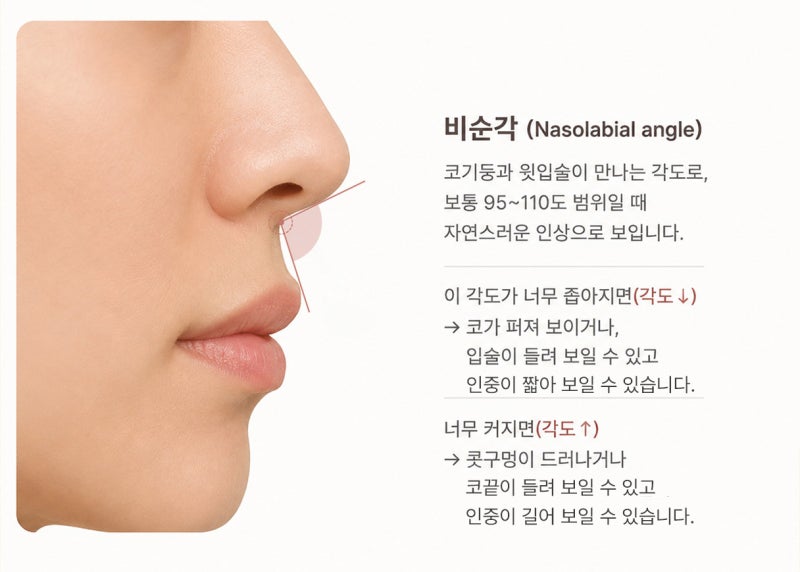
In profile, the "Nasolabial Angle" must also be considered.
The nasolabial angle refers to the angle created between the columella and the upper lip.
Because subnasal philtrum reduction suspends upper lip tissue superiorly,
it alters not only philtral length but also the spatial relationship where the subnasal base meets the upper lip.
However, there is an important caveat:
The nasolabial angle does not change in the same direction for every patient undergoing the procedure.
Beyond the native shape of the nasal tip and columella or the baseline protrusion of the upper lip,
the outcome varies depending on the lateral extent of excision,
the directional vector of tissue elevation,
the anatomic layer and site of fixation,
and the strategy used to distribute tension.
In other words, postoperative shifts in the nasolabial angle cannot simply be explained by
"how many millimeters were removed."
Even with identical excision measurements, surgical nuances dictate the forces delivered to the subnasal base and the trajectory of the upper lip.
This is why pre-operative planning must evaluate
not just philtral length, but the nasal tip,
columella, alar base, nostril sill, and upper lip posture simultaneously,
anticipating the precise vectors of postoperative tension.
Philtrum reduction is not merely a surgery of "subtracting millimeters"; it is an architectural design that accounts for where adjacent tissues will reposition once those millimeters are removed.
04 The Direction and Distribution of Subnasal Tension
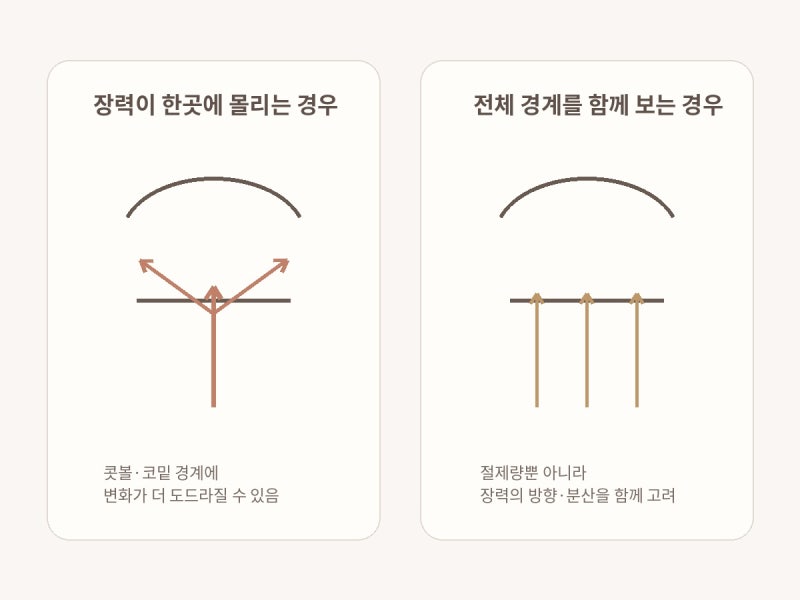
Ultimately, surgical success is about more than just "how many millimeters are excised"
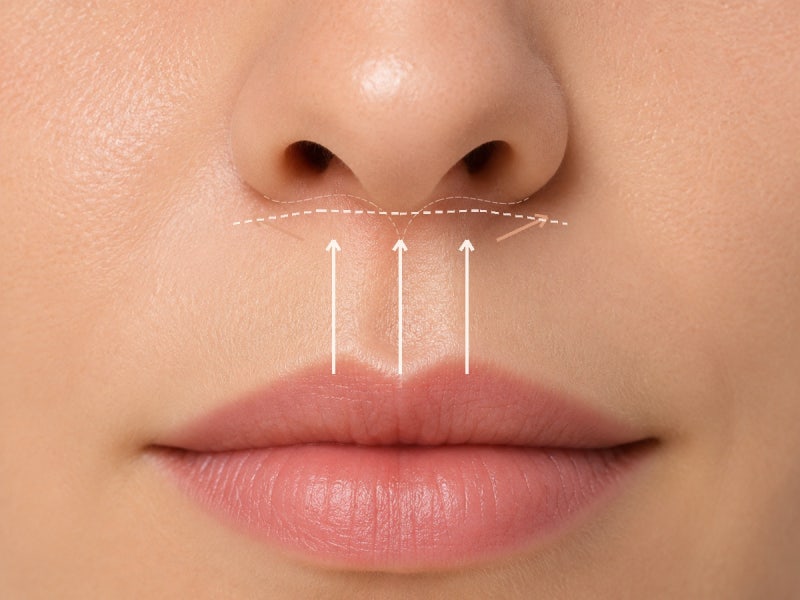
While excision volume is often the first metric discussed regarding philtrum reduction,
in practice, deciding in which direction to mobilize the remaining tissue and preventing tension concentration at any single point is equally critical.
If tension is applied predominantly to the midline or localized excessively, the subnasal boundary and vermilion border can appear unnaturally distorted.
Conversely, assessing the entire subnasal perimeter—including lateral extensions—
and distributing tension evenly helps preserve a seamless, harmonious transition between the nose and lip.
Because dissection planes and fixation techniques vary across surgical approaches,
it is impossible to predict results by merely comparing the number of millimeters excised.
05 How Should We Interpret the Data?
Clinical studies demonstrate both the "potential for change" and "individual variability"

A 2021 study observed statistically significant changes in alar width and the nasolabial angle, alongside philtral shortening and increased upper lip show.
On the other hand, a 2026 3D longitudinal follow-up study noted minor alar width changes during early postoperative phases,
yet over the long term, both alar width and the nasolabial angle remained largely stable.
Because patient cohorts and surgical techniques differed, one cannot make a direct 1:1 comparison between these findings.
However, current clinical evidence indicates that
claiming "there is zero change to the nose" or asserting "the nostrils will definitely widen" are both inaccurate extremes.
What matters is identifying which anatomical areas have the potential to change beforehand and evaluating how those shifts will interact with your specific nasal and lip framework. |
06 Pre-operative Checkpoints
Cases that require meticulous subnasal design
If you naturally have a wider alar base,
marked facial asymmetry,
or a prominently projected nasal tip,
even minor postoperative shifts can feel relatively conspicuous.
Furthermore, if you are planning rhinoplasty or have already undergone it, the nostril sills, columella,
and alar contours may be altered, requiring surgical sequencing and incision design to be tailored individually.
On the other hand, having a wide alar base does not preclude you from undergoing a philtrum reduction.
The key lies in how the excision borders and tension vectors are customized to complement your current anatomical framework.
The Ultimate Goal of Philtrum Reduction Is Not "The Shortest Possible Philtrum"

The essence of a philtrum reduction is not chasing an arbitrary millimeter goal,
but envisioning the balanced proportion that will remain between the nose and upper lip once the philtrum is shortened.
At Golden Diamant Plastic Surgery,
we design surgical boundaries by evaluating not just philtral length and tooth show, but alar base width, subnasal contour, nasolabial angle, tip projection, and the lateral philtrum.
If shortening the philtrum makes the nose appear disproportionately wide or pulls the upper lip into an exaggerated lift, the overall facial harmony has not truly improved.
In philtrum reduction, what matters far more than "how many millimeters were removed" is how naturally the nose and lip harmonize after the reduction. |
Thank you.
※ This article provides general medical information based on standard surgical principles and clinical literature. Anatomical structures and outcomes vary per individual.
※ Potential surgical side effects include swelling, bruising, scarring, asymmetry, infection, and temporary sensory changes. A comprehensive in-person consultation is advised prior to surgery.
#GoldenDiamantPlasticSurgery #DrSanghoonSong #PhiltrumReduction #SubnasalPhiltrumReduction #PhiltrumReductionSurgery #AlarBase #NasolabialAngle #UpperLip #PerioralAesthetics #CheongdamPlasticSurgery
Frequently Asked Questions
Does a philtrum reduction always make the nostrils or alar base wider?
Not necessarily. Because subnasal philtrum reduction elevates and anchors perinasal tissue superiorly, visual changes around the nose can occur. However, whether widening occurs depends heavily on baseline alar anatomy, lateral excision design, anchoring depth, and tension-distribution techniques.
Can a philtrum reduction alter nasal tip projection or the nasolabial angle?
Yes, shifts in the nasolabial angle and nasal tip appearance are possible. Elevating upper lip tissue changes the soft-tissue drape at the junction of the columella and lip. Depending on the excision amount, pulling vector, and fixation plane, lateral profile aesthetics can change subtly.
Can I get a philtrum reduction if I naturally have a wide alar base?
Yes, you can still be an excellent candidate. Having a wider alar base does not disqualify you from surgery. By thoroughly analyzing nostril sill geometry and distributing tension laterally rather than centralizing it, a skilled surgeon can prevent undesirable widening.
Can I undergo a philtrum reduction if I have had or plan to have rhinoplasty?
Yes, but careful structural planning is essential. Rhinoplasty alters the position of the columella, nostril sill, and alar support. Depending on whether you have had prior nose surgery or plan to in the future, the surgical timing, sequence, and incision designs should be tailored individually.
Is a larger excision amount always better in philtrum reduction?
No, simply removing more tissue is rarely ideal. Over-resection or excessive central tension can create an unnatural contour at the subnasal sill and distort the vermilion border. The true goal is achieving balanced proportions between the nose and lip while maintaining natural tissue mobility.