2026-07-25
Scarless Philtrum Reduction? Essential Checks Before Surgery! Why Original Philtrum Reduction Remains Important
This article discusses the principles and advantages of original subnasal philtrum reduction, emphasizing its ability to directly control philtrum length, lip shape, and facial balance, contrasting it with newer 'scarless' methods.


Hello.
I am Song Sang-hoon, the head director of Cheongdam Goldendiamant Plastic Surgery.
In my previous article, we looked at many of the recently popular names, such as 3rd-generation philtrum reduction, scarless philtrum reduction, and hidden incision philtrum reduction.
These methods certainly have advantages in terms of reducing the burden of scars.
Philtrum reduction surgery is not a procedure decided solely by making scars less visible.
Reducing the philtrum can also change the shape of the upper lip, tooth exposure, corner of the mouth direction, and the line under the nose.
Therefore, today I will explain the principles of original subnasal philtrum reduction and why it still holds significance.
The Principle of Original Subnasal Philtrum Reduction
Original subnasal philtrum reduction involves making an incision along the border under the nose, then adjusting the skin, subcutaneous tissue, and, in some cases, the muscle layer as needed to reduce the length of the philtrum.
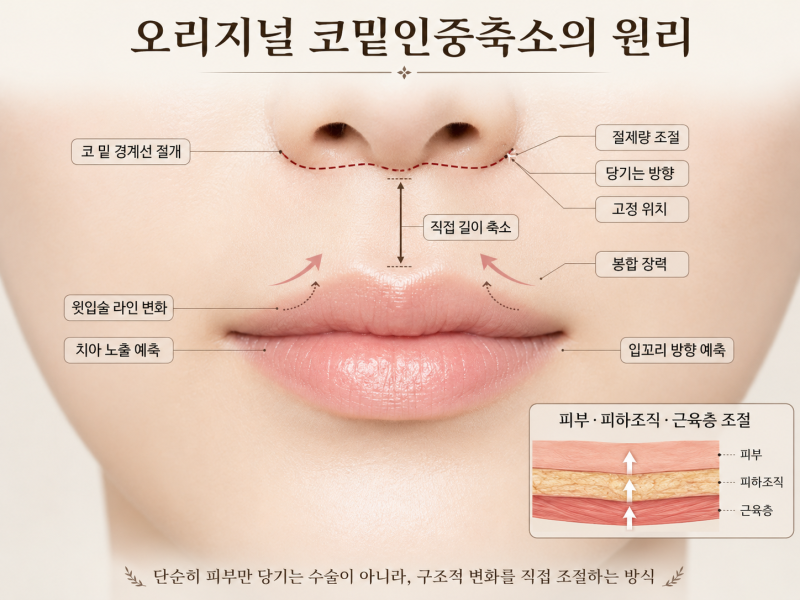
The core of this method is its ability to directly reduce the philtrum.
The surgeon can directly observe the tissue between the nose and the upper lip,
allowing for control over the amount of excision, direction of pulling, fixation position, and suture tension.
Philtrum reduction surgery is not simply about cutting skin and pulling it upwards.
It requires predicting how much the upper lip will lift after surgery, how much mucosal exposure of the lip will occur, whether tooth exposure will increase, and whether the corners of the mouth will appear relatively lowered.
The original method is excellent for directly controlling these changes.
Especially for those with a distinctly long philtrum and thin or inwardly rolled upper lips,
subnasal philtrum reduction can reduce philtrum length while enhancing the upper lip line.
Cases Where the Original Philtrum Reduction Method is Beneficial
There are specific cases where original subnasal philtrum reduction is particularly meaningful.
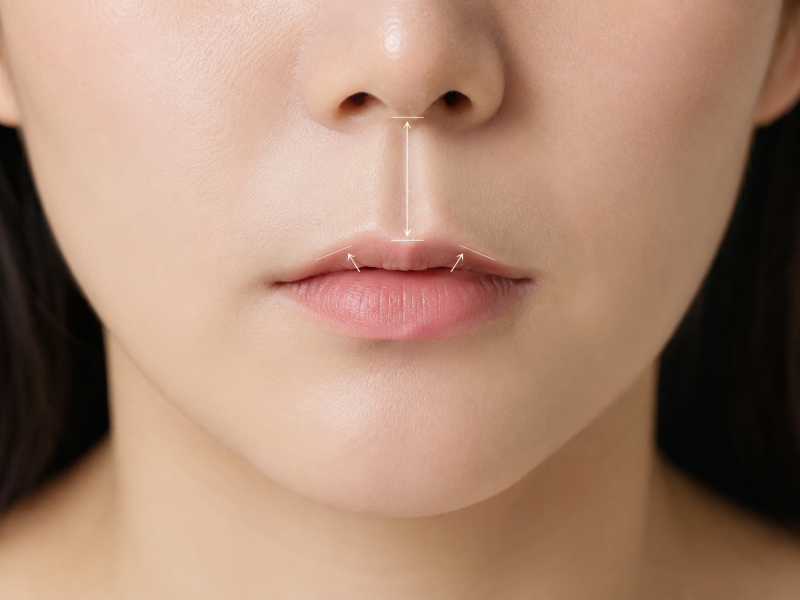
The first is when the philtrum itself is long, making the face appear elongated.
For individuals whose nose and upper lip appear far apart, and whose mid-lower face seems long, directly reducing the philtrum length can lead to a noticeable change in facial proportions.
The second is when the upper lip is thin and rolled inwards.
As the philtrum is reduced and the upper lip is everted to some extent, the upper lip line can become more defined and the lips can appear more vibrant.
The third is when precise control over the amount of excision and direction is required.
For those who need to consider not only philtrum length but also the subnasal line, lip thickness, tooth exposure, and the direction of the mouth corners, direct control during surgery is crucial.
In such cases, the original method offers the advantage that the surgeon can relatively clearly calculate and adjust the range of changes.
Tension Management is More Important Than Scars
Scars are the biggest concern for many people undergoing philtrum reduction surgery.
Of course, the location of the incision is also important.
However, scars are not determined solely by the incision location.
The appearance of scars can vary depending on how much was reduced, how much tension is placed on the suture site,
how much the surgical area is pulled when moving the mouth, and how stable the tissue fixation is.
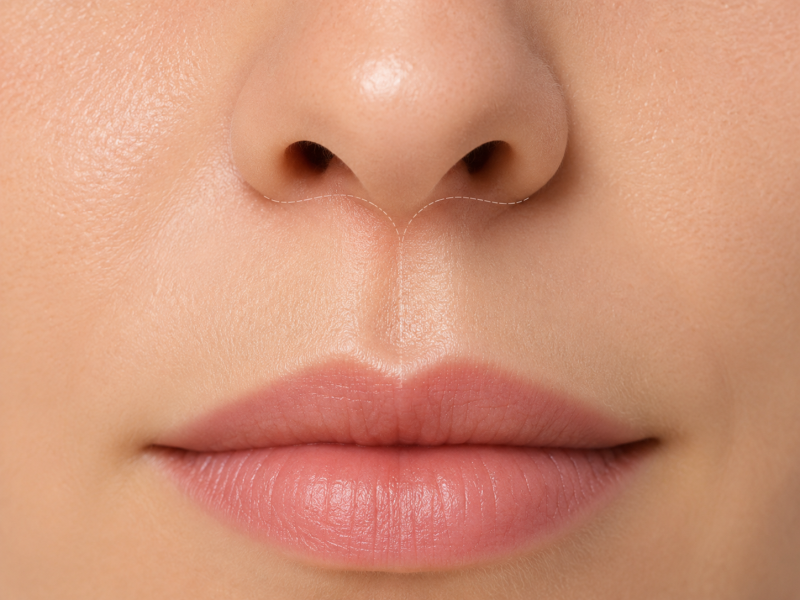
At Goldendiamant, when performing original subnasal philtrum reduction,
we emphasize not just pulling and suturing the skin, but stably fixing the philtrum tissue to the subnasal tissue to reduce the burden on the suture site.
Proper distribution of tension ensures stable maintenance of the post-surgical shape and reduces the burden of scars.
The key to reducing scars is not just hiding the incision line,
but performing a structurally stable surgery to prevent excessive pulling of the surgical area.
Natural Lip C-Curve is Also Important
After philtrum reduction, the upper lip lifts to some extent, changing the lip line.
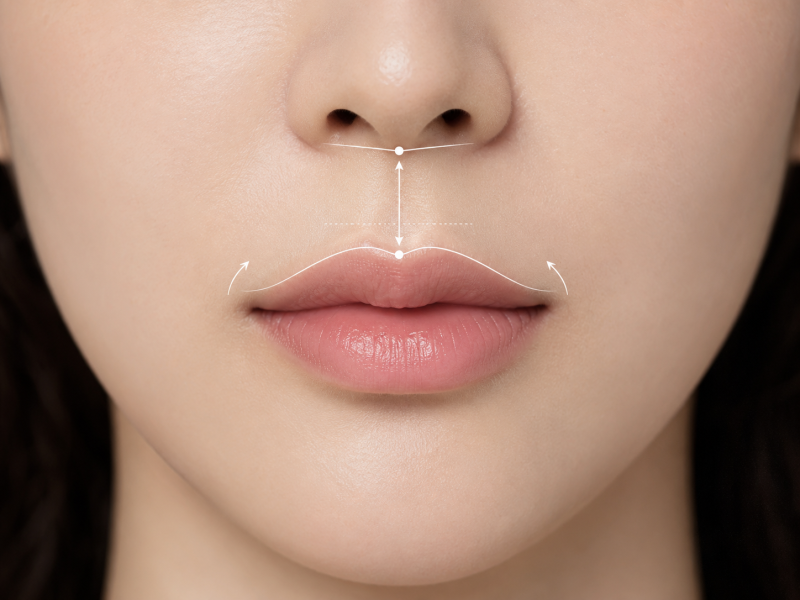
If this change appears naturally, the face can look shorter,
and a more youthful impression can be expected with a more defined upper lip.
However, if only the central part is excessively lifted or the lip line bends unnaturally, the surgical appearance can be strong.
Therefore, at Goldendiamant, we prioritize designing the central 2/3 of the philtrum to lift naturally, ensuring the lip line connects seamlessly, rather than just lifting the center.
Philtrum reduction is a surgery that reduces length and simultaneously designs the mouth shape.
As important as shortening is a natural C-curve and the sense of connection in the lips.
Changes in the Subnasal Line Must Also Be Considered
Philtrum reduction surgery is performed directly below the nose.
Therefore, how the subnasal line, nostril shape, and columella area appear after surgery is also important.
Excessive excision or excessive tension can lead to the subnasal area appearing pulled or concerns about changes in nostril shape. In the original method, not only philtrum length but also the subnasal structure must be considered together.
At Goldendiamant, if necessary, we plan to minimize changes in the subnasal structure by reinforcing the lower part of the nasal sill,
ensuring a natural connection between the philtrum and the upper lip.
Changes You Must Be Aware of After Surgery
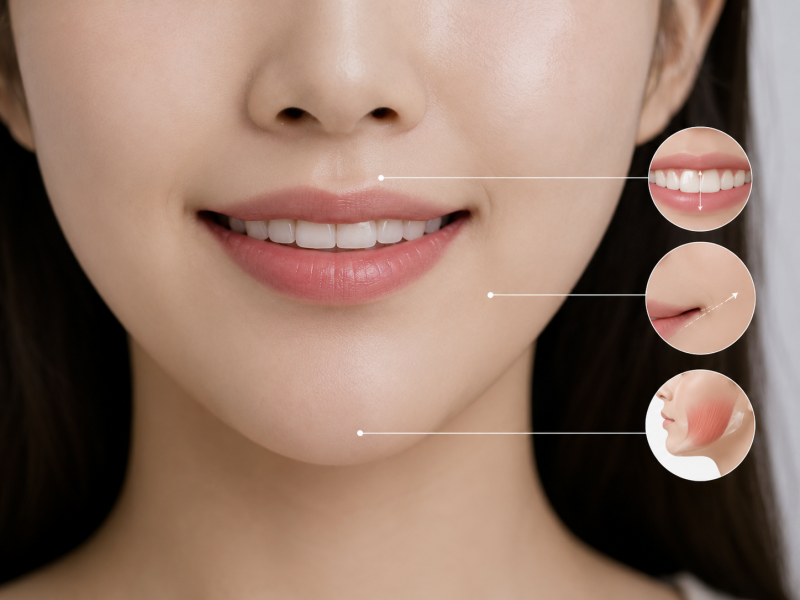
If you are planning philtrum reduction surgery, you should be aware of the changes in your mouth shape beforehand.
Reducing the philtrum can make the upper lip appear somewhat larger.
Also, the central part of the upper lip lifting can increase tooth exposure.
The change in the slope of the upper lip line can also make the corners of the mouth appear relatively lowered.
These changes are structural changes that can occur after philtrum reduction, rather than indicating a botched surgery.
Therefore, individuals whose mouth corners are already lowered before surgery, who have a protruding mouth, or who have significant tooth exposure before surgery need to make a more careful decision.
During the consultation process, it is essential to confirm whether philtrum reduction alone will yield good results, whether corner of the mouth surgery or other mouth shape corrections are needed, or whether philtrum reduction itself should be approached with caution.
3rd Generation vs. Original, Which is Better?
To conclude, it is difficult to say that one is unconditionally better than the other.
3rd-generation philtrum reduction has advantages in reducing scar exposure.
Original subnasal philtrum reduction has the advantage of directly adjusting philtrum length,
and being an excellent method for predicting and controlling upper lip eversion, C-curve, subnasal line, and corner of the mouth changes during surgery.
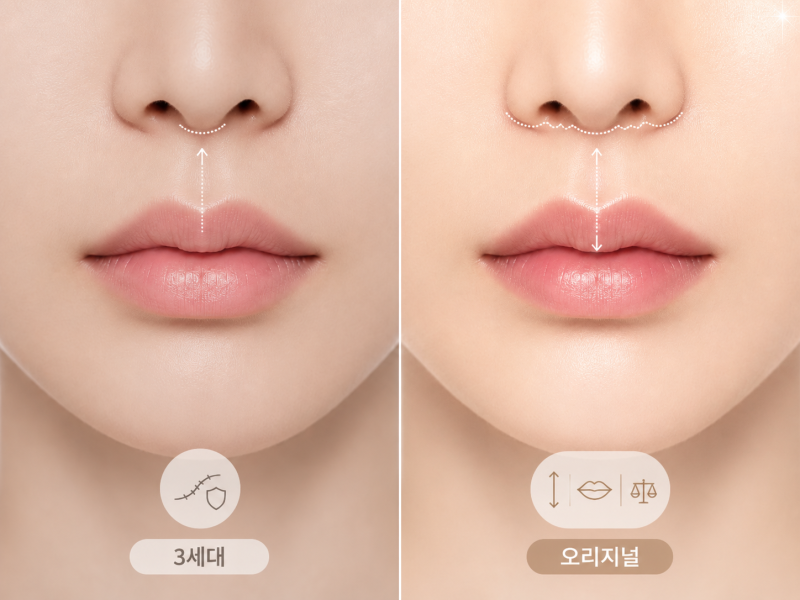
What is important is not the name of the surgical method, but whether it is suitable for your face.
Some people are most concerned about scars, while others prioritize improving philtrum length.
Some have thin upper lips and need changes in the lip line, while others are burdened by excessive changes due to tooth exposure or a protruding mouth.
Therefore, philtrum reduction surgery should be decided based on current facial proportions and mouth structure, rather than following popular names.
Goldendiamant views the original method as follows:
We do not simply see original subnasal philtrum reduction as an outdated method.
Rather, we view it as a fundamentally solid method that allows for direct analysis and control of philtrum length, upper lip changes, subnasal structure, corner of the mouth direction, and tooth exposure.
New methods also have their advantages.
However, the advantages of long-proven methods are also clear.
The advantage of the original is not simply ‘it can reduce a lot.’
It is that it can reduce precisely, predict the direction of change, and adjust the balance of the lips and subnasal line together.
If you are considering philtrum reduction surgery, there are things to check before asking ‘which generation of surgery is it?’
- Is my philtrum truly one that needs to be reduced?
- How will my upper lip and mouth corners change when reduced?
- How will scars and tension be managed?
- What is the natural amount of excision for my face?
The process of finding answers to these questions determines the surgical outcome.
Philtrum reduction surgery is not just about shortening; it is about rebalancing facial proportions and mouth shape.
Through sufficient consultation, please make a careful decision on the method that suits you.
Thank you.
#GoldendiamantPlasticSurgery #DirectorSongSangHoon #PhiltrumReduction #PhiltrumReductionSurgery #SubnasalPhiltrumReduction #OriginalPhiltrumReduction #MouthShapeSurgery #LipSurgery #CheongdamPlasticSurgery