2026-09-11
3D Scarless Philtrum Reduction & Columellar Philtrum Reduction: Who Is the Right Candidate?
Discover whether 3D scarless or columellar philtrum reduction fits your facial profile. Understand key factors including columellar descent, tooth show, and balanced perioral aesthetics.
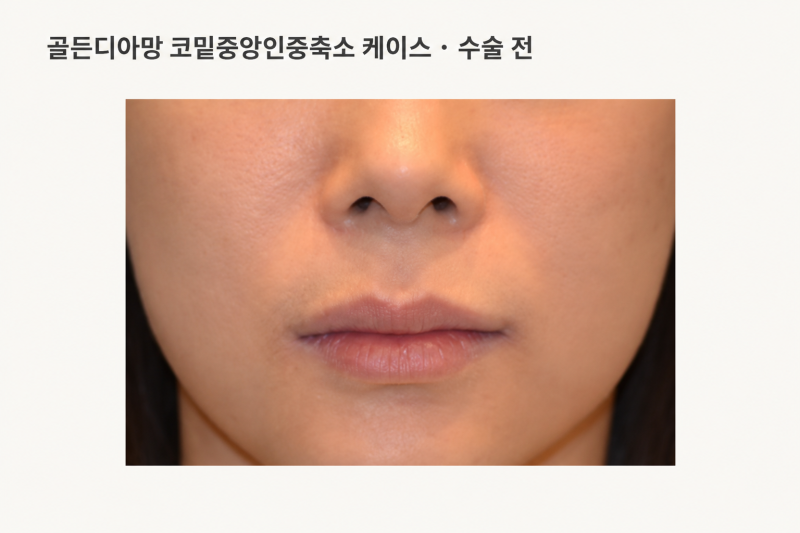
Checking the Columella Position Before Philtrum Length When Considering Subnasal Central Philtrum Reduction
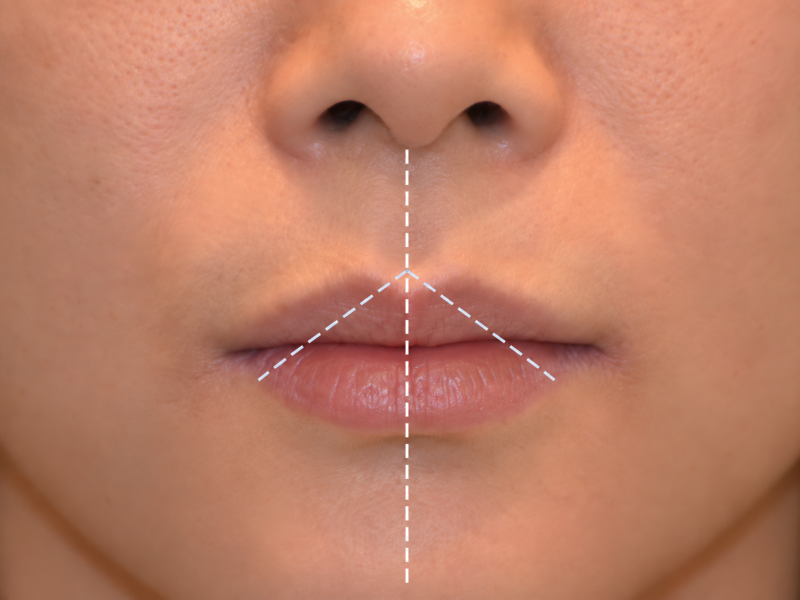
Hello. I am Dr. Sang-hoon Song, Chief Director at Golden Diamant Plastic Surgery.
These days, when searching for philtrum reduction, you frequently encounter new surgical terms like "3D Scarless Philtrum Reduction" or "Columellar Philtrum Reduction."
While the precise definition of these names may vary across clinics, they are generally used to describe approaches that reduce the philtrum by utilizing the central philtral area and the pericolumellar region.
At Golden Diamant, we never group philtrum reduction into a single procedure. We customize and apply distinct approaches according to facial structure, including subnasal philtrum reduction, subnasal central philtrum reduction, hybrid, and tetra scarless methods.
This is because even when people share the same concern that "my philtrum is too long," their anatomical structures differ significantly.
01 First, We Distinguish Between the Central and Lateral Philtrum
A long philtrum does not necessarily mean the central portion needs to be shortened.
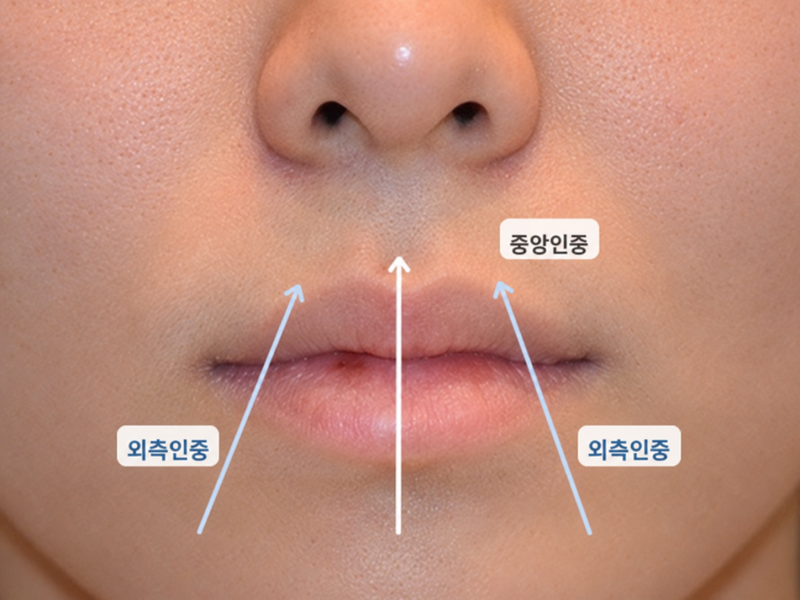
One person might have a long central philtrum while the lateral philtrum is well-proportioned, whereas another person might have a lateral philtrum that is longer than the central section, causing the mouth corners to appear drooped downward.
Subnasal central philtrum reduction exerts direct changes specifically on the midline; hence, it delivers significant benefits for a "centrally long philtrum."
However, if you aggressively elevate only the central section on a face where the lateral philtrum is also elongated, the angle between the center and the corners of the mouth steepens, potentially making the mouth corners appear even more drooped. In such cases, an entirely different approach is required.
02 The Hidden Key to This Surgery Is the Columella
When the central philtrum is elevated, the columella can become more prominently lowered.
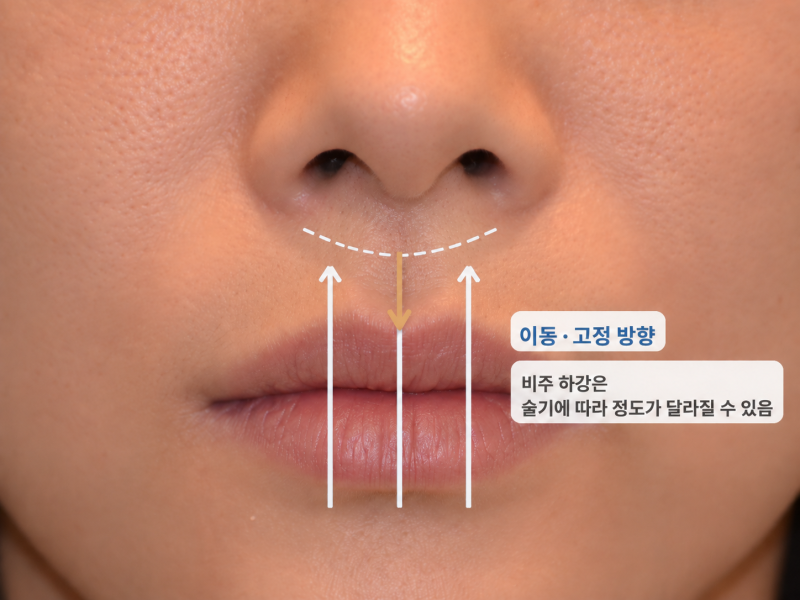
Subnasal central philtrum reduction mobilizes and anchors central philtral tissue close to the base beneath the columella.
During this process, while the central philtrum is shortened, the columella may appear relatively more exposed downward.
This change should not automatically be considered an adverse effect.
Instead, for individuals whose columella is short or retracted upward into the nose, this dynamic can be intentionally utilized to bring out and project an underdeveloped columella.
However, the degree of change will vary depending on the surgeon's excision design, dissection plane, fixation points, and vector of tension distribution.
03 There Are Ideal Candidates for This Procedure
When the columella is short and the central philtrum is long
If the columella is short or retracted—making the area beneath the base of the nose appear sunken—and the central philtrum is long, the characteristics of this surgery can serve as a distinct advantage.
Furthermore, when the center of the upper lip is curled inward with limited vermilion display and front upper tooth show is normally low, elevating the central region can provide a very flattering enhancement.
If the lateral philtrum and mouth corner positions are relatively stable, adjusting only the central portion can effortlessly maintain a natural transition along the entire perioral contour.
04 If the Columella Is Already Prominent, the Opposite Applies
The same columellar descent can result in an overcorrected appearance.
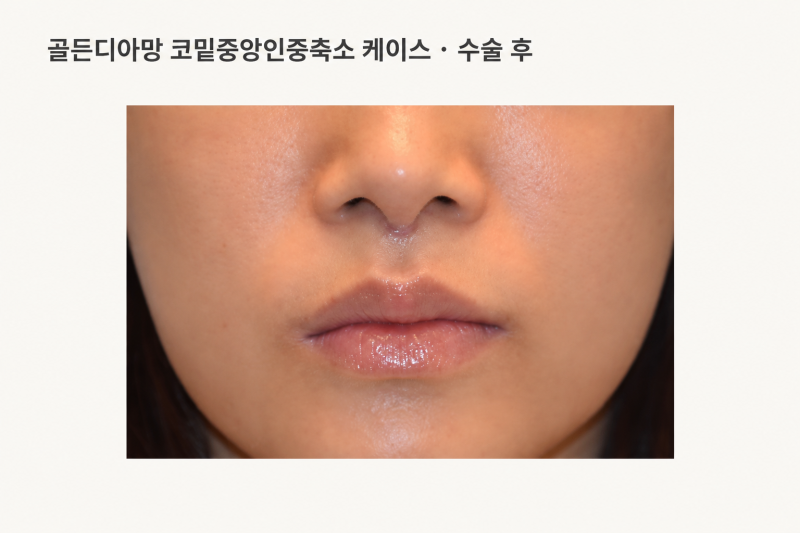
If the force to lift the central philtrum is applied to someone whose columella is already long and positioned sufficiently downward, the columella may become excessively pronounced.
This can create a heavy look beneath the nose or give the impression that the lower portion of the nose has become elongated; therefore, subnasal central philtrum reduction must be approached with extreme caution in such facial profiles.
The same caution applies to patients with excessive incisor show or an already upturned upper lip.
In these cases, the cosmetic drawback of excessive tooth or gum display can easily outweigh any benefits gained from further elevating the center.
05 Why Surgical Outcomes Vary Across Clinics
Surgical technique—excision, dissection, and fixation—matters far more than procedure names.
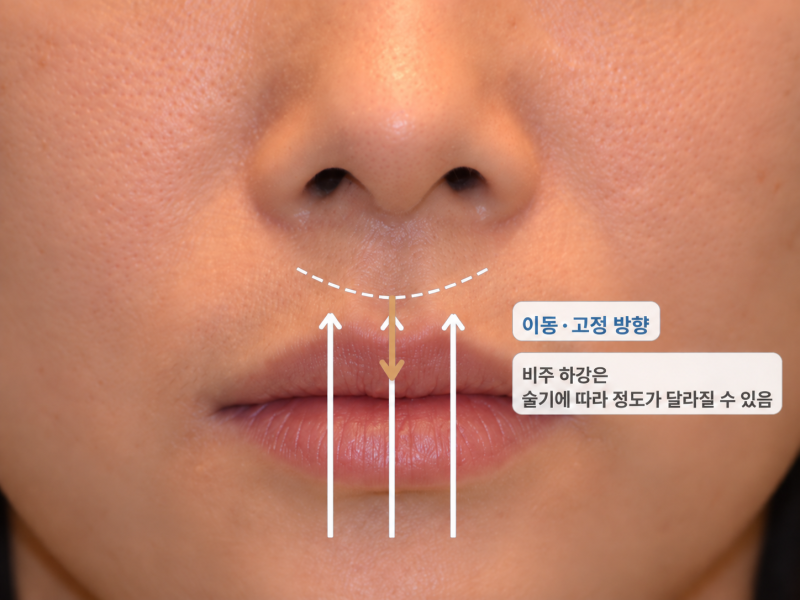
It is difficult to predict actual surgical outcomes solely based on promotional names such as "3D Scarless Philtrum Reduction" or "Columellar Philtrum Reduction."
It is difficult to predict actual surgical outcomes solely based on promotional names such as "3D Scarless Philtrum Reduction" or "Columellar Philtrum Reduction."
This is because the trajectory of movement for both the columella and the lips changes depending on how much tissue is excised, which tissue plane is dissected, where the central philtral tissue is anchored, and how surgical tension is divided between the center and surrounding zones.
Because the incision for a subnasal central philtrum reduction is comparatively concentrated in the midline, minute variations in surgical technique can lead to notable differences in the appearance of the columella and lip line. Consequently, the surgeon's clinical judgment is paramount.
06 What You Miss When Looking Only at the Central Philtrum
Incisor show, lateral lip contour, and oral commissures must be evaluated collectively.
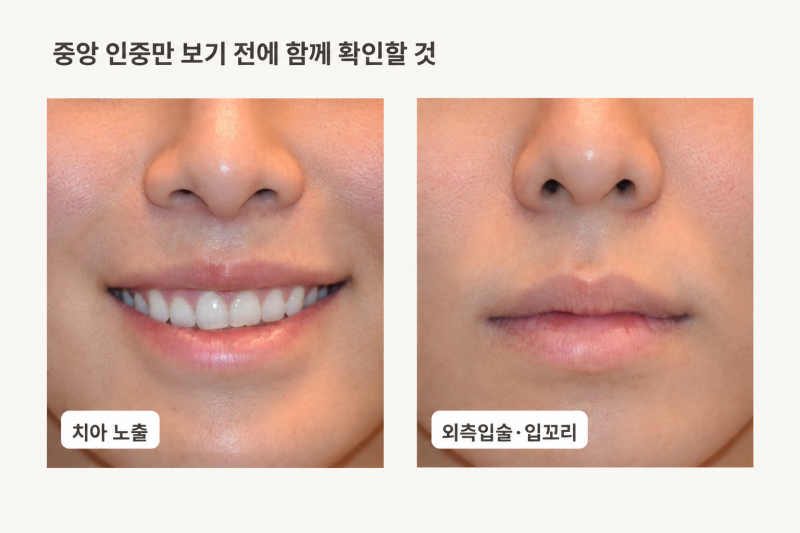
Following a philtrum reduction, tooth display may increase as the center of the upper lip lifts.
Moreover, if only the center is raised while the outer lip and mouth corner positions remain unchanged, the oral commissures can appear relatively more drooped.
Therefore, a consultation must not focus solely on whether the columella is short, but must also assess how much tooth is exposed, the length of the lateral philtrum, the slope of the outer lip, and the height and angle of the mouth corners.
07 Golden Diamant's Standard for This Procedure
It is not a matter of "avoiding it," but of applying it exclusively to candidates who truly require it.

Subnasal central philtrum reduction can unquestionably be an exceptional procedure.
Particularly for patients with a short or retracted columella, the downward repositioning of the columella itself functions as an aesthetic correction.
However, for those whose columella is already prominent, or who require concomitant correction of the lateral philtrum and mouth corners, manipulating only the midline may not be the optimal solution.
This is why Golden Diamant does not decide on a surgical name beforehand.
We first perform an in-depth analysis of the central philtrum, lateral philtrum, columella, subnasal sill, tooth exposure, and lip incline before selecting the exact technique best suited to each unique face.
At Golden Diamant Plastic Surgery, we offer six comprehensive philtrum reduction techniques:
Medial Philtrum Reduction, Lateral Philtrum Reduction, Lip Line Philtrum Reduction, Hybrid Philtrum Reduction, Non-Incisional Scarless Philtrum Reduction, and Subnasal Central Philtrum Reduction
Alongside corner lip lifts, philtral column/dimple shaping (philtrum depression),
and various perioral surgeries tailored to individual lip anatomy and patient goals,
we conduct fully customized surgical plans through thorough in-depth consultations.

A procedure that yields optimal outcomes for someone else might turn out to be completely wrong for you.
If you are considering philtrum reduction or lip aesthetics, be sure to consult with a plastic surgeon who specializes in perioral aesthetics with extensive academic research and clinical experience.
A successful philtrum reduction is not defined by the newest procedure name, but by repositioning only the necessary structures in the exact vectors required for your face. |
The true key to subnasal central philtrum reduction is not merely shortening length, but determining whether the resulting descent of the columella will serve as a distinct aesthetic advantage for your facial profile. |
We hope you discover the perioral procedure best suited for your unique facial balance.
If you have any further questions regarding Golden Diamant Plastic Surgery's customized lip and philtrum design, please feel free to contact our clinic.
We will gladly assist you with detailed guidance and consultation.
Thank you!
#GoldenDiamantPlasticSurgery #DrSanghoonSong #3DScarlessPhiltrumReduction #ColumellarPhiltrumReduction #SubnasalCentralPhiltrumReduction #PhiltrumReduction #ColumellarDescent #SubnasalSill #PerioralSurgery
Frequently Asked Questions
Why is columella position crucial in subnasal central philtrum reduction?
Because the columella can appear relatively lowered during the surgical process. Subnasal central philtrum reduction anchors central philtral tissue near the subcolumellar area; while this corrects a short or retracted columella, it can cause the base of the nose to look heavy or excessively elongated if the columella is already prominent.
Which facial anatomy is best suited for subnasal central philtrum reduction?
It is ideal for candidates who have a short or retracted columella accompanied by an elongated central philtrum. High satisfaction is also achieved when the center of the upper lip curls inward with limited vermilion display, resting tooth exposure is modest, and the lateral philtrum and mouth corners are well-balanced.
Can I undergo this surgery if I already have significant tooth show or a long columella?
These candidates should evaluate central philtrum reduction with extreme caution. Lifting the central philtrum elevates the upper lip further, which can worsen excessive incisor show and accentuate an already low columella, potentially creating an unbalanced look.
Is this procedure effective if my lateral philtrum is long and mouth corners are drooped?
No, performing only central reduction in this case may not be appropriate. Shortening exclusively the central section when the lateral philtrum is long steepens the downward slope toward the mouth corners, making them look even more drooped. A comprehensive approach tailored to the entire perioral structure is recommended.
Do outcomes for 3D scarless or columellar philtrum reduction differ between clinics?
Yes. Regardless of the marketing name, outcomes depend heavily on the depth of dissection, excision design, anchoring location, and tension distribution vectors. How and where the tissue is fixed fundamentally changes the post-operative movement of the columella and lip contour.