2026-09-25
How Should Lip & Mouth Area Revision Surgery Be Planned? Why Width, Facial Expressions, and Scarring Must Be Evaluated Together
Discover why lip and perioral revision surgery requires comprehensive analysis of lip width, dynamic facial expressions, scar contracture vectors, and avoidance of overcorrection.
Hello.
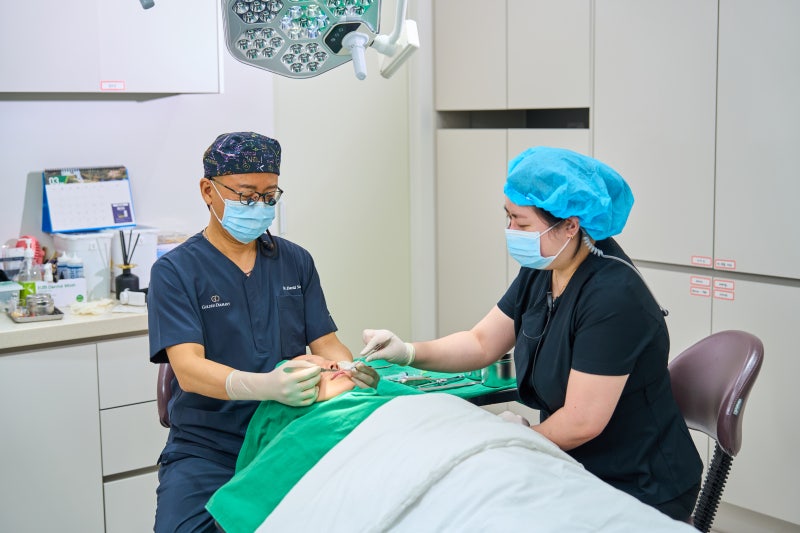
I am Dr. Sang-hoon Song, Chief Plastic Surgeon at Golden Diamant Plastic Surgery.
In Part 1, we discussed why the mouth area may appear unnatural after philtrum, lip, or mouth corner surgery, noting that it is not simply an issue of length or height.
Factors such as curling of the lateral lips, the slope of the upper lip vermilion ridge, left-right symmetry, and the condition of the tissues all play an interconnected role.
So, by what standards should revision surgery be planned?
Revision surgery is not simply repeating the first surgery.
Rather, it is a process of redesigning balance by analyzing the remaining tissue and expression dynamics within an already altered anatomical structure.
In this Part 2, I will explain key considerations, focusing on lip width extension, dynamic analysis between resting and smiling expressions, the vector of scar tension and contracture, and the limitations of numerical planning and overcorrection.
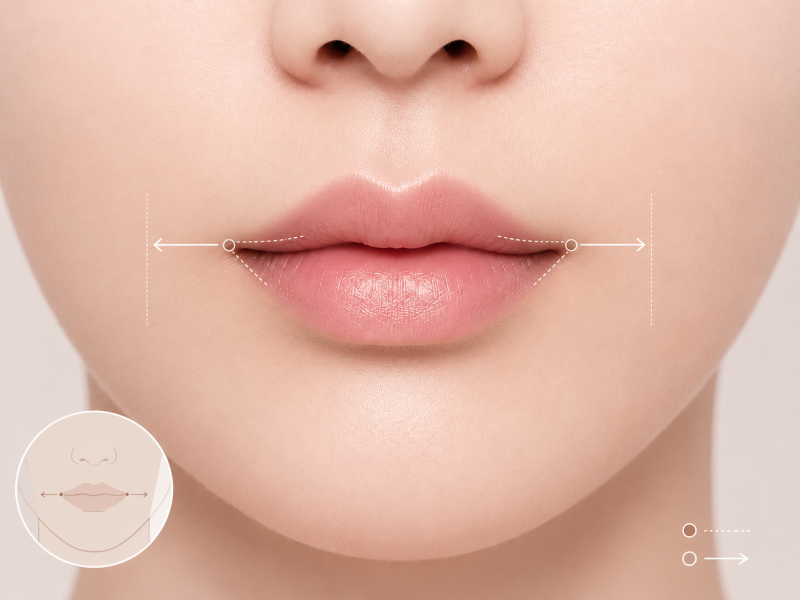
How should lip horizontal width extension be planned?
Lengthening the horizontal width of the lips is not merely about pulling the mouth corners outward.
The newly positioned mouth corner and the lateral vermilion ridge of the upper lip must connect seamlessly and smoothly.
If the vermilion border breaks abruptly or the lateral lip becomes excessively thin, the horizontal width might increase, but the overall impression can appear stiff and artificial.
Therefore, before surgery, it is essential to evaluate whether the horizontal lip width is truly narrow relative to overall facial proportions,
whether the outer upper lip curls inward to create the illusion of a narrower width,
whether the heights of both mouth corners differ,
whether the slopes of the upper lip ridges are asymmetric,
and whether the lip itself slants to one side.
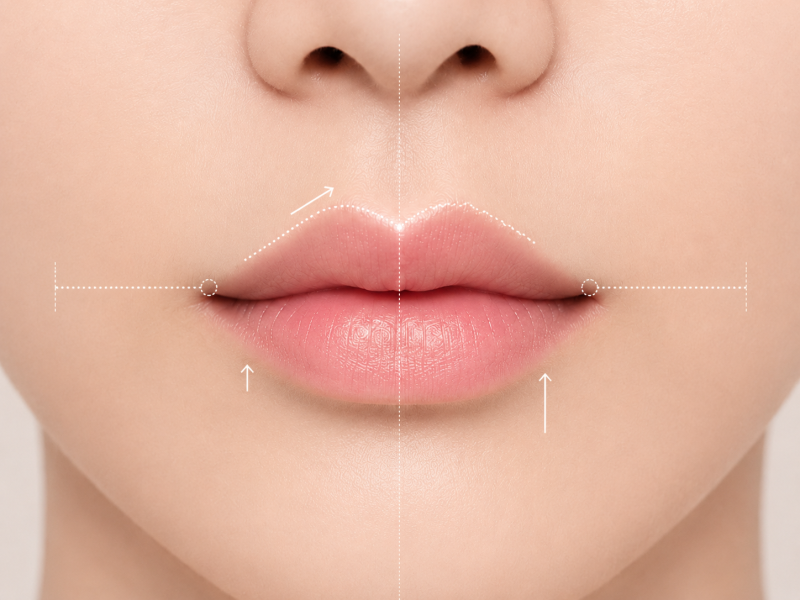
Based on this comprehensive analysis, a surgical design must be crafted so that the corner positions and the outer lip contours blend naturally.
Both resting and smiling expressions must be evaluated prior to revision surgery
The mouth area behaves very differently at rest compared to when smiling.
Asymmetries that are barely noticeable at rest may become pronounced when smiling,
and conversely, mouth corners that appear slightly downturned at rest might look entirely natural during dynamic smiling.
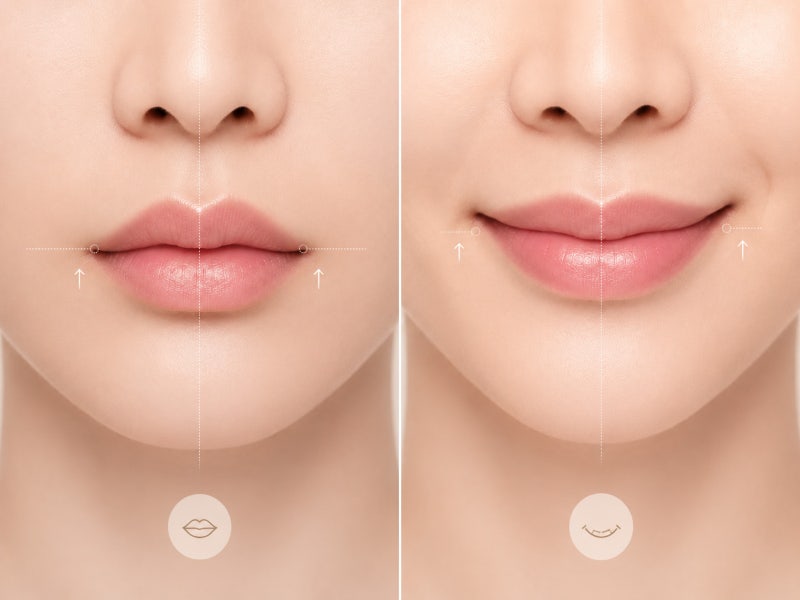
This is why revision surgery planning must not rely solely on static, straight-faced photos.
It is crucial to observe which areas experience increased tension when the mouth is closed, when smiling,
and while speaking.
By understanding how the tissues shift across different facial movements, we can accurately distinguish between what needs surgical correction and what should be left untouched.
For scars and contractures, vector tension matters more than just location
Virgin tissue and previously operated tissue are fundamentally different.
After an initial surgery, scar tissue forms, and anatomical elements may have been excised or fixed at altered points.
Therefore, in revision surgery, the changes induced by the primary surgery and the underlying causes of dissatisfaction must be identified first.
We must evaluate where existing scars reside,
whether the tissue suffers from firm contractures,
which areas demonstrate worsening asymmetry during mouth closure or smiling,
and in which vectors the lips and corners are being pulled.
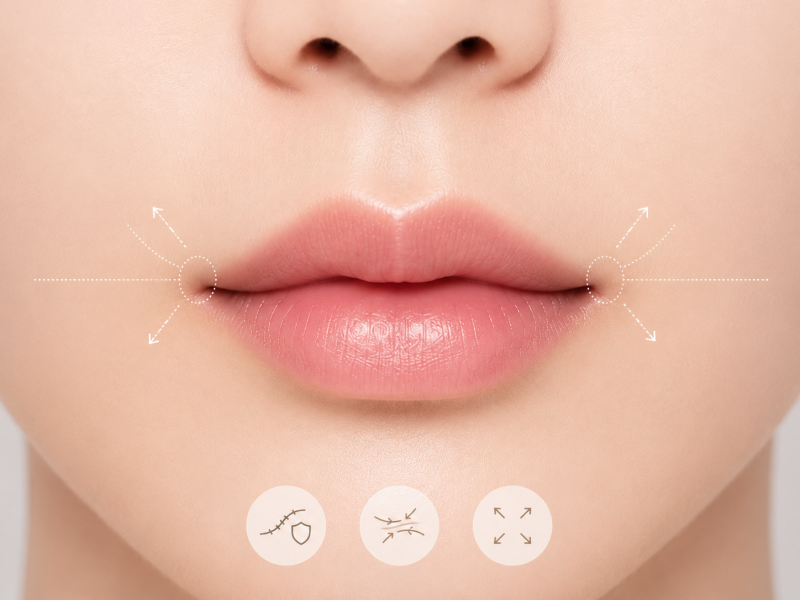
Following this, the scar tissue is carefully released within the necessary range,
aesthetic and functional issues stemming from depressions or contractures are corrected,
and the tissue is re-anchored into a stable position.
Finally, meticulous layered suturing is performed to prevent excessive tension from concentrating on the wound margins.
Revision surgery is not simply doing the same procedure twice; it is redesigning structural balance within tissue that has already been modified.
Why lip redesign should never rely strictly on measurements
During lip surgery consultations, patients frequently ask:
“How many millimeters can you shorten it?” or “How many millimeters can you widen my mouth?”
Measuring dimensions is, of course, an essential step in surgical planning.
However, specific numbers alone never guarantee an aesthetically pleasing outcome.
Even with the exact same millimetric adjustment, the result appears entirely different depending on existing lip volume, vermilion ridge angles, and baseline corner positions.
Similarly, shortening the philtrum by the exact same amount can result in vastly different degrees of upper lip eversion, tooth show, corner trajectory, and chin strain from person to person.
Lip aesthetics cannot be dictated by rigid formulas;
instead, the surgeon must evaluate what degree of change will look organic within the patient's individual facial framework.
Overcorrection is difficult to reverse
Caution must be exercised against excessively shortening the philtrum,
over-elevating the corners, or aggressively widening the mouth solely in pursuit of a sharper or more dramatic contour.
Once tissue is resected, restoring it to its original anatomical state is extremely difficult.
Because tissue elasticity and availability are often limited in revision cases compared to initial procedures,
the goal should not simply be dramatic change, but rather identifying what can realistically and safely be improved in the current state.
If the expected structural benefit is marginal, it may be wiser to postpone or reconsider revision surgery.
The objective of revision surgery is not to erase the previous procedure, but to establish the most natural balance possible with the remaining anatomical structures.
Golden Diamant's approach to lip and perioral revision surgery
At Golden Diamant Plastic Surgery, we do not view the philtrum, mouth corners, and lip width as isolated segments.
We conduct an integrated evaluation of philtrum length, upper lip volume, lateral vermilion rolling, ridge incline angles, corner vectors, and scar condition.

In revision cases, understanding precisely what changed after the first surgery is paramount. We determine whether the corners simply need elevation, whether width and lateral contouring must be adjusted simultaneously, whether scar contracture release must take priority, or whether conservative observation and non-surgical treatments are the safer choice.
Closing Part 2
If you are considering mouth or lip revision surgery, try not to focus solely on one isolated flaw in the mirror.
Take time to observe the continuity of the entire perioral area and how it moves across dynamic expressions.
An ideal mouth contour is not one with mathematically identical measurements on both sides,
but one that harmonizes naturally and gracefully with the entire face.
Thank you.
#GoldenDiamantPlasticSurgery #DrSanghoonSong #PerioralRevisionSurgery #PhiltrumReductionRevision #CornerLipLiftRevision
#LipWidthExtension #CornerLipLift #ScarContracture #LipOvercorrection #CheongdamPlasticSurgery
Frequently Asked Questions
What must be considered when extending lip width?
The transition between the newly created mouth corner and the lateral upper lip vermilion ridge must be seamless. Simply pulling the corners outward can cause unnatural ridge angulation or excessive thinning of the lateral lip, resulting in an artificial look. Facial proportions, inward lip rolling, and left-right symmetry must all be analyzed comprehensively.
Why are dynamic expressions evaluated prior to revision surgery?
Asymmetries and structural tension vectors present differently at rest compared to when smiling. Observing dynamic movement rather than relying solely on static photos allows the surgeon to accurately determine which anatomical regions require surgical revision and which should be preserved.
How is revision surgery managed when scars and contractures are present?
The surgeon evaluates not just scar location, but tissue induration and the direction of contracture tension. During revision, scar tissue is meticulously released within a safe range, functional and aesthetic contour defects are corrected, and tissue is repositioned with delicate suturing techniques that prevent high tension along the closure.
Can revision lip surgery be performed according to a specific millimeter measurement?
Targeting rigid millimetric figures does not guarantee optimal aesthetic outcomes. The same numerical measurement yields vastly different results depending on lip volume, ridge angles, and mentalis muscle tension. The goal is to determine the degree of structural change that harmonizes naturally with the patient's individual facial framework.
Why should overcorrection be strictly avoided in mouth and lip surgery?
Once tissue has been excised, reversing it completely to its virgin state is exceptionally difficult. Revision surgery operates on limited reserve tissue; therefore, instead of pursuing aggressive alterations, it is critical to determine safe, sustainable improvements within the bounds of the remaining tissue.